The clause stays in. Now what? 🤔
Most contract talk stops at the counter-proposal. In real deals some clauses simply do not move. Then the plan matters more than the wording.
A good mitigation plan is built close to real life. It answers questions like:
⏱️ How do I build float into the schedule when a liquidated damages risk looms? 📈 How do I make the contract inflation-proof, not with one clause, but together with hedging in Finance and Supply Chain?
And it says what it costs and how much risk it takes off the table.
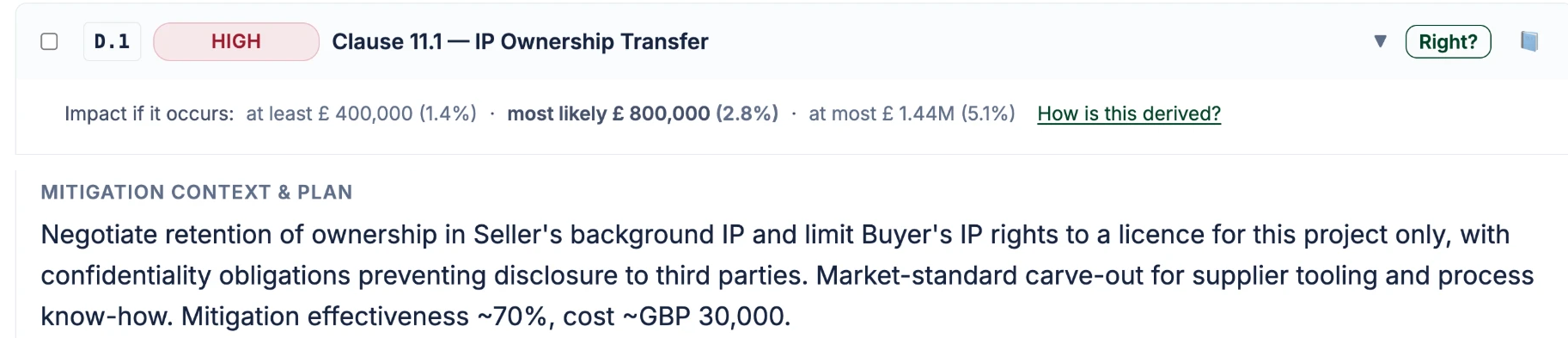
📌 Here, for an IP transfer clause: negotiate to keep our background IP, limit the licence to this project, carve out tooling and process know-how. The scan estimates the effort at ~£30,000 and the effect at ~70%, against a most likely exposure of £800,000. Estimates, not promises: you check them.
That is no longer “we should keep an eye on it”. It is a decision. ⚖️
Where do the plans come from? The reference risk library behind them comes from my experience in international industrial projects. It is the fall-back. The next step is to feed them with deep research from global databases and the web, so a plan reflects what works today, not only what worked for me. 🔍
What does your plan B look like when the clause stays?
Happy Selling! 🙂
Juergen